Dried Coriander Leaves: Essential Herb for Global Food and Spice Export
Culinary Essential: Exporting Premium Dried Coriander Leaves (Cilantro)
Introduction
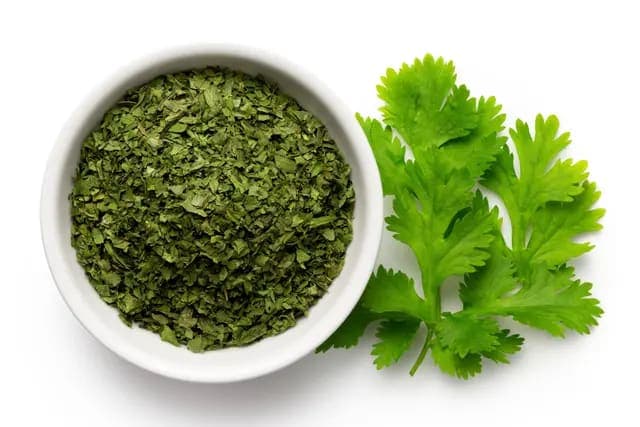
The product displayed—dried and chopped coriander leaves (often known as dried cilantro)—is a foundational component of international cuisine. Presented next to its fresh counterpart, the image emphasizes the product's natural origin and high quality. Exporting dried herbs offers significant advantages due to their extended shelf life, minimal weight, and consistent demand from the global food processing and consumer spice markets.
Key Features
The dried coriander leaves exhibit qualities highly valued by international food importers:
- Consistent Chopping: The material in the bowl appears uniformly chopped, which is essential for consistent measurement and visual appeal in packaged spice mixes and ready meals.
- Vibrant Color Retention: The deep green color suggests careful, quality drying processes that help preserve the aesthetic and potentially the herb's flavor and aroma compounds.
- Ready-to-Use Format: The chopped, dried form is immediately usable by manufacturers, requiring no further processing by the importer.
- Concentrated Flavor: Drying concentrates the herb's flavor, making it an efficient ingredient for industrial use.
Material & Craftsmanship
The raw material is fresh Coriander/Cilantro leaves. The "craftsmanship" is focused on the post-harvest processing:
- Quality Sourcing: The fresh sprig suggests the dried product originates from healthy, high-grade plants.
- Controlled Drying: The excellent color retention indicates that the leaves were dried rapidly under controlled conditions (e.g., low heat or air drying) to maintain quality and minimize nutritional loss.
- Clean Processing: The absence of visible stems or foreign material in the bowl indicates rigorous cleaning and sorting before chopping and packaging.
Export Advantages
Dried herbs like coriander leaves are highly favorable for international trade:
- Long Shelf Life: The dried form significantly reduces the risk of spoilage during long transit times and storage.
- Reduced Volume/Weight: Removing moisture reduces bulk, lowering freight and handling costs per unit of product.
- Consistent Global Demand: Coriander is a staple seasoning used across Asian, Latin American, and Middle Eastern cooking, ensuring wide market appeal.
Global Market Demand
There is continuous, robust demand for dried culinary herbs from various sectors globally:
- Spice Packers: Companies that package and sell individual spices and seasoning blends.
- Food Manufacturers: Producers of sauces, soups, frozen meals, and snack foods.
- Ethnic Food Importers: Distributors specializing in international cuisine ingredients.
Use Cases
International buyers use dried coriander leaves extensively for:
- Seasoning: Directly in cooking or as a finishing sprinkle on dishes like salads, tacos, and curries.
- Spice Blends: As a component in rubs, garam masalas, and other compound seasonings.
- Ingredient in Processed Foods: Added to soups, prepared meals, and savory baked goods for flavor and visual appeal.
Care & Maintenance Tips
Guidelines for importers to maximize product longevity:
- Storage: Store the dried leaves in opaque, airtight containers to protect them from light and moisture.
- Temperature: Maintain a consistent, cool storage temperature to preserve volatile oils and color.
- Handling: Avoid exposing the herb to steam or humidity, which can accelerate degradation.
Conclusion
Dried coriander leaves represent an exceptional export commodity due to their universal culinary use, stability, and ease of transport. By focusing on maintaining the vibrant color and consistent chopping grade shown in the image, exporters can secure profitable contracts within the steady and expansive global market for high-quality food ingredients and spices.